Managing technological infrastructure manually is, in today’s corporate environment, an unsustainable practice. Operational bottlenecks, human configuration errors, and hidden cost overruns drag down any organization’s competitiveness. At the intersection of financial technology (FinTech) and mass data analysis (Data Analytics), agility is not a competitive advantage; it is a survival requirement.
This is where cloud automation comes into play. This guide objectively and comprehensively breaks down what Cloud Automation is, how it differs from similar concepts, and which tools are leading the transformation of IT infrastructure.
What Exactly is Cloud Automation?
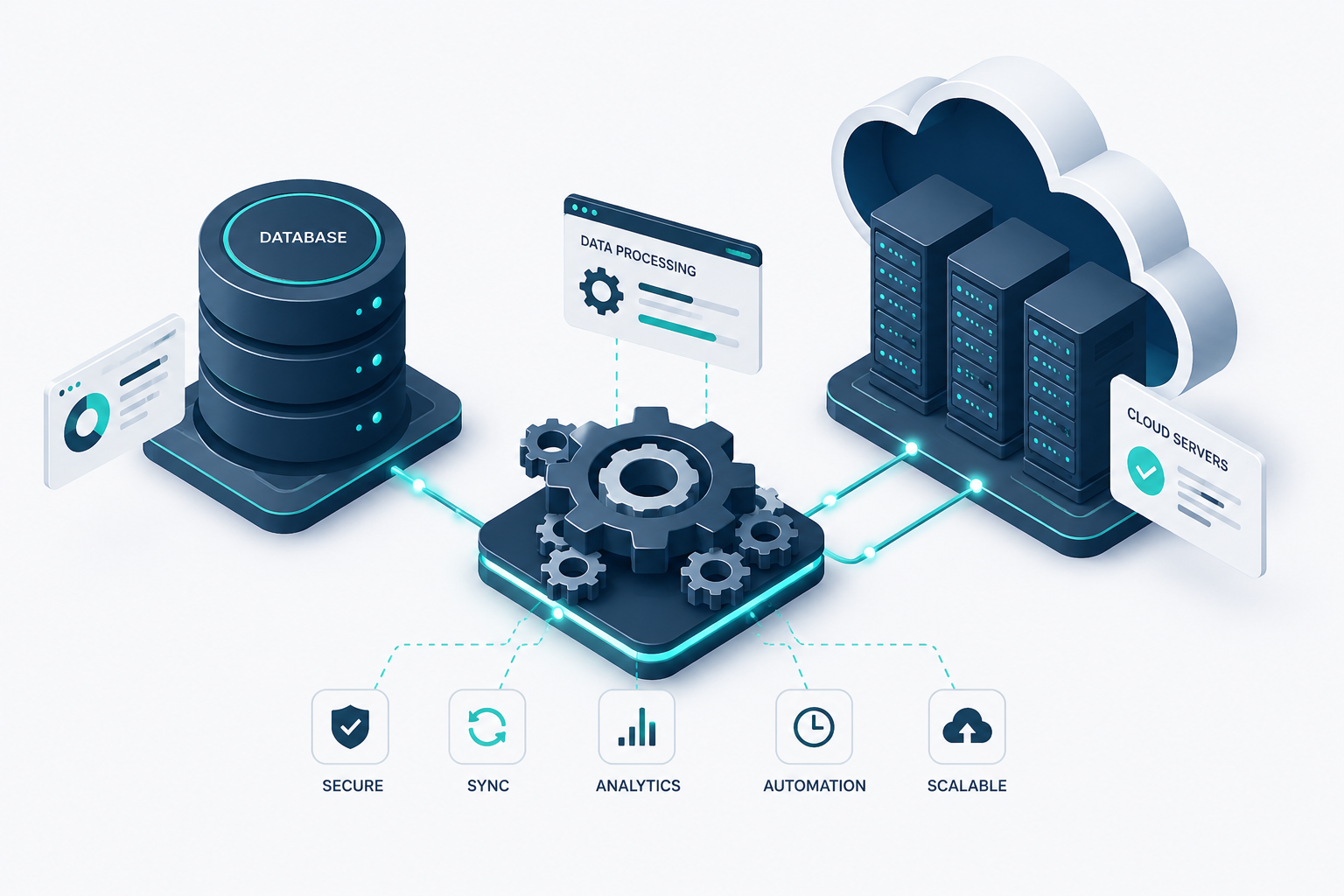
Cloud Automation is the process of using software tools, scripts, and code-based methodologies to provision, configure, and manage cloud computing infrastructure autonomously.
Instead of a systems engineer navigating web interfaces and clicking through menus to create databases, assign IP addresses, or configure security firewalls, automation allows these tasks to be executed programmatically. The primary goal is to minimize human intervention in repetitive tasks, standardize work environments, and free up engineering time for developing high-value solutions.
In the realm of Data Analytics and financial modeling, cloud automation is what allows data processing systems to scale instantly when a complex macroeconomic model needs to be run, and scale back down when the task finishes, thereby optimizing resource consumption.
Key Differences: Automation vs. Orchestration
It is common in technical literature for the terms «automation» and «orchestration» to be used interchangeably. However, understanding the difference is vital for designing an efficient systems architecture:
- Automation: Refers to the autonomous execution of a single task. For example, a script that deploys a virtual web server, or a command that performs an automatic backup of a financial database at 3:00 AM.
- Orchestration: Is the coordination, sequencing, and management of multiple automated tasks to achieve a complete workflow. If automation is tuning an instrument, orchestration is conducting the symphony. An orchestration tool deploys the database, then deploys the web server, connects them securely via a network, and finally load-balances the traffic between them.
Objective Benefits of Cloud Automation
Implementing a Cloud Automation strategy transforms a company’s operational structure. Proven benefits within the tech industry include:
1. Elimination of Human Error and Standardization
Manual deployment («ClickOps») is prone to errors. A misconfigured security port or an overly permissive access policy can result in catastrophic data breaches. By using Infrastructure as Code (IaC), environments are always deployed from pre-approved and audited templates, guaranteeing total uniformity from the development stage through to production.
2. Operational Cost Efficiency
Keeping idle resources running is one of the biggest financial drains in public cloud computing. Automation allows for the establishment of dynamic scaling policies (Auto-scaling), adjusting server capacity to real demand. Furthermore, it automates the shutdown of testing environments during weekends, strictly aligning infrastructure expenses with actual business utilization.
3. Accelerated Time-to-Market
For companies relying on data analytics or FinTech platforms, the speed at which new features are launched is critical. Automation facilitates Continuous Integration and Continuous Deployment (CI/CD) pipelines, allowing code to move from testing to production in minutes rather than weeks, right after passing automated quality assurance checks.
Key Tools Dominating the Industry
The automation tooling ecosystem is vast but has consolidated around several leading solutions used by major global corporations:
- Terraform (HashiCorp): The industry standard for Infrastructure as Code. It allows for the definition of cloud resources (AWS, Google Cloud, Azure) using a declarative language (HCL). It is provider-agnostic, making it ideal for multi-cloud strategies.
- Ansible (Red Hat): Excels in configuration management. Unlike other tools, it operates without needing agents installed on target servers (agentless), using YAML to automate OS configuration and dependency installation.
- Kubernetes: The ultimate platform for container orchestration. It automates the deployment, scaling, and management of containerized applications, ensuring high availability and resilience.
- AWS CloudFormation / Azure Resource Manager: Native infrastructure-as-code solutions provided by the public cloud giants themselves, specifically optimized for their own ecosystems.
Your Experience: Let’s Talk Business Reality
Technical theory always sounds perfect, but actual implementation has its nuances. If your day-to-day involves business administration, analyzing data for complex marketing campaigns, or structuring large-scale financial models, I would love to hear your perspective.
What has been the biggest hurdle you’ve faced when trying to automate processes in your organization? Has it been the technical learning curve, resistance to change within the team, or the difficulty of measuring the actual financial impact? Share your experience and perspective in the comments to enrich this discussion.
Frequently Asked Questions (FAQ)
Is programming knowledge required to implement Cloud Automation? While emerging «Low-Code» tools exist, deep enterprise-level automation requires knowledge of declarative languages (like YAML or HCL) and an understanding of software architectures. Modern operations teams (DevOps / SRE) blend traditional systems engineering with software development skills.
Does automation compromise security by granting autonomous permissions to machines? On the contrary. When implemented correctly following the «least privilege» principle, automation improves security posture. Every infrastructure change goes through version control repositories (Git), meaning every modification is reviewed, tested, and carries an immutable audit trail before being applied.
Is Cloud Automation exclusive to large corporations? No. Small and medium-sized enterprises (SMEs) that base their models on SaaS or data analytics also benefit immensely. Open-source tools allow for the automation of smaller infrastructures, laying a solid foundation that will enable structured business scaling in the future.