
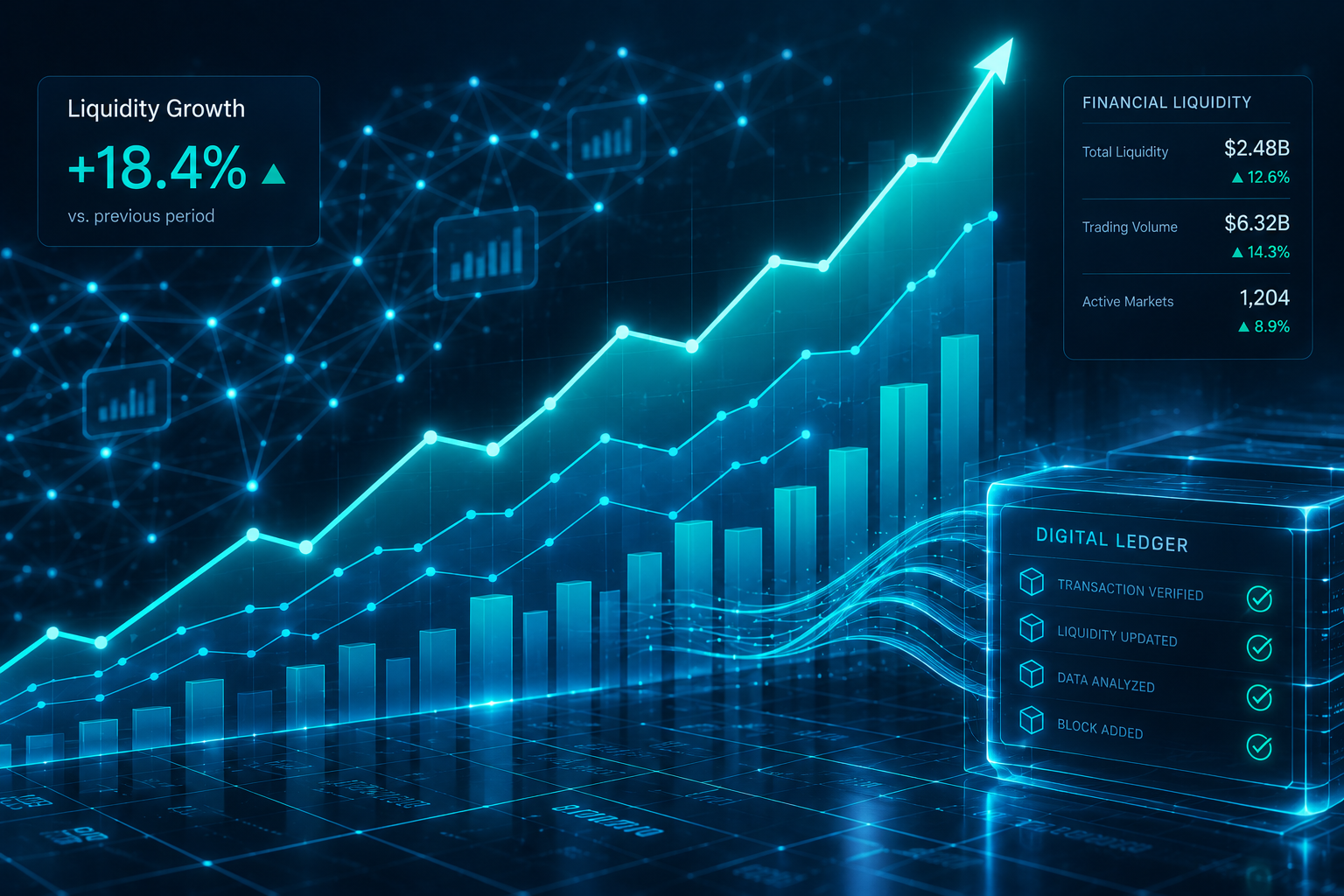
In the modern corporate landscape, profitability on an income statement does not guarantee survival; liquidity does. The ability to anticipate the exact timing of cash inflows and outflows is what separates resilient organizations from those vulnerable to market shocks. Cash flow forecasting is the analytical process of estimating the financial liquidity of an entity over a specific future period.
This comprehensive guide breaks down the core methodologies, data architectures, and technological advancements—from advanced data querying to modern treasury APIs—that are redefining how organizations monitor and project their cash positions. This article is designed for financial analysts, treasury professionals, and operations managers seeking objective, data-driven approaches to liquidity management.
1. The Strategic Importance of Liquidity Management
At its core, cash flow forecasting is a diagnostic tool. It provides a forward-looking x-ray of an organization’s financial health. While traditional accounting focuses on recognizing revenue when it is earned (accrual accounting), cash flow analysis strictly tracks when the actual currency enters or leaves the bank account.
The primary objectives of a robust forecasting model include:
- Liquidity Visibility: Identifying potential cash shortages weeks or months before they occur, allowing the treasury team to secure short-term funding or adjust operational spending.
- Working Capital Optimization: Understanding the cash conversion cycle to negotiate better payment terms with suppliers (Accounts Payable) or enforce stricter collection policies with clients (Accounts Receivable).
- Strategic Capital Allocation: Identifying periods of surplus cash that can be deployed for capital expenditures, debt reduction, or operational expansion without jeopardizing day-to-day solvency.
2. Direct vs. Indirect Forecasting Models
Building a forecast requires choosing the right mathematical and structural approach based on the time horizon and the availability of data. The industry recognizes two primary methodologies:
The Direct Method (Short-Term Focus)
The direct forecasting method is highly granular and typically covers a short time horizon (e.g., 1 to 13 weeks). It builds the forecast from the bottom up, utilizing actual, scheduled cash receipts and disbursements.
- Inflows: Expected bank deposits, cleared invoices, and point-of-sale settlements.
- Outflows: Scheduled payroll runs, tax payments, rent, and vendor invoices.
Because it relies on actual transactional data rather than statistical assumptions, the direct method is highly accurate for immediate liquidity management. However, its accuracy drops significantly beyond the 90-day mark due to the lack of scheduled transactional data that far in the future.
The Indirect Method (Long-Term Focus)
The indirect method is utilized for medium-to-long-term planning (e.g., 1 to 5 years). Instead of tracking individual transactions, it starts with the projected Income Statement and Balance Sheet.
The mathematical foundation involves adjusting projected Net Income by adding back non-cash expenses (like depreciation) and accounting for changes in working capital:
$Projected Cash Flow = Net Income + Non-Cash Expenses \pm Changes in Working Capital$
This method is essential for strategic business planning, securing long-term financing, and evaluating the overall financial trajectory of the organization over multiple fiscal quarters.
3. Data Architecture and Variable Integration
A forecasting model is only as reliable as the data pipeline that feeds it. One of the most significant challenges in modern financial analysis is the fragmentation of data sources.
When coordinating the financial logistics of large-scale public relations events or nightlife promotions, for instance, reconciling digital ticket distribution data with physical box office receipts and actual bank deposits requires rigorous extraction processes. To prevent manual entry errors, analysts frequently rely on robust transformation engines like Power Query. By creating automated ETL (Extract, Transform, Load) pipelines, raw data from disparate ticketing platforms and vendor invoices can be cleaned, standardized, and merged into a centralized treasury model seamlessly.
Key Data Inputs for a Robust Forecast
- Accounts Receivable (AR) Ledger: Not just what is owed, but the historical probability of when it will be paid.
- Accounts Payable (AP) Ledger: Scheduled obligations and discretionary payments.
- Historical Seasonality: Statistical trends that dictate when revenue naturally peaks or dips (e.g., holiday seasons, academic calendar cycles).
- Macroeconomic Indicators: External variables such as interest rate changes that affect debt servicing costs, or currency exchange rates for international operations.
4. Modernizing Treasury: The Role of Financial Technology
The technological landscape of 2026 has pushed cash flow forecasting from static spreadsheets to dynamic, interconnected ecosystems.
API Integration and Open Banking
The reliance on manual bank statement downloads is obsolete. Through Open Banking protocols and secure APIs, modern forecasting tools connect directly to corporate bank accounts and ERP systems. This allows for real-time cash positioning, where the starting cash balance in the forecast is updated automatically every morning based on overnight banking settlements.
Blockchain and Cross-Border Treasury
For multinational entities, moving money across borders introduces severe liquidity blind spots due to settlement delays and hidden correspondent banking fees. Modern treasury solutions leveraging blockchain networks (such as those developed by Ripple and similar distributed ledger technologies) allow for instant, verifiable cross-border settlements. This predictability is revolutionary for forecasting, as treasurers no longer have to build «buffer zones» into their models to account for multi-day international wire delays.
Artificial Intelligence and Predictive Analytics
While no technology can predict the future with absolute certainty, AI algorithms excel at identifying hidden patterns in historical data. Machine learning models analyze thousands of past invoices to predict the exact date a specific client is likely to pay, adjusting the expected AR inflow dynamically. This drastically reduces the margin of error compared to standard «30-day» static assumptions.
5. Variance Analysis: The Key to Continuous Improvement
A forecast is not a «set it and forget it» document. The core of financial discipline, strongly advocated by institutions like the Government Finance Officers Association (GFOA), is Variance Analysis.
Variance analysis is the systematic process of comparing the forecasted cash position against the actual cash position at the end of a period.
- Identify the Delta: Did the company end the month with $50,000 less than projected?
- Isolate the Root Cause: Was the shortfall due to lower-than-expected sales, a delay in a major client payment, or an unbudgeted operational expense?
- Refine the Model: Once the root cause is identified, the assumptions in the forecasting model must be adjusted to prevent the same error in future projections.
By continuously performing variance analysis, the forecasting model «learns» and becomes progressively more accurate over time, transforming from a rough estimate into a highly tuned operational instrument.
💡 Professional Insight: The Data Consolidation Challenge
When auditing the financial performance of complex operations or multi-channel campaigns, the timing of cash inflows rarely matches the initial projections. In your analytical experience, what has been the most significant technical hurdle when building these models: integrating clean data from legacy CRM/ERP systems, or accurately predicting customer payment behavior during economic shifts? Share your methodology in the comments below.
6. Frequently Asked Questions (FAQ)
What is the difference between a cash flow forecast and a budget?
A budget is a plan for profitability; it outlines expected revenues and expenses over a year to determine if the company will make a profit. A cash flow forecast tracks liquidity; it maps the exact timing of when that cash will physically enter or leave the bank account. A company can be within budget but still run out of cash due to timing mismatches.
How often should a cash flow forecast be updated?
The frequency depends on the organization’s liquidity constraints. A highly profitable enterprise with massive cash reserves may only update its indirect forecast monthly or quarterly. However, a startup, an event management agency, or a business operating with tight margins should maintain a direct 13-week forecast updated on a weekly or even daily basis.
Can software guarantee financial stability?
No. Financial compliance and operational realities dictate that no software, algorithm, or forecasting model can guarantee economic results or prevent insolvency. Forecasting tools provide diagnostic visibility and data-driven estimates. Financial stability relies entirely on the executive decisions and disciplined capital management executed by the human leadership team in response to those forecasts.