In the modern financial landscape, the speed of capital execution has entirely outpaced human capacity. Traditional trading floors dominated by frantic shouting have been replaced by humming server racks, high-speed fiber-optic cables, and complex mathematical code. Whether executed by massive institutional hedge funds or independent quantitative researchers, automated trading systems now account for the vast majority of daily volume across major global equities, foreign exchange, and digital asset markets.
Yet, despite its ubiquity, algorithmic trading remains widely misunderstood. Often conflated with guaranteed wealth generation or high-frequency wizardry, true algorithmic trading is simply the systematization of financial logic. By codifying strategies into software, market participants can eliminate emotional bias, execute trades with surgical precision, and backtest hypotheses against decades of historical data. This guide explores the foundational concepts, core strategies, risk controls, and architectural frameworks that define modern quantitative execution.
The Evolution of Systematic Execution
To understand algorithmic trading, one must first look at its mechanical definition: the use of computer programs to execute trades based on pre-defined, codified rules. Instead of manually monitoring market tickers and clicking buy or sell buttons, traders convert market data into automated decisions.
The roots of this technology stretch back decades, evolving from simple automated quote displays and basic stop-loss orders into sophisticated, multi-layered machine-learning architectures. Historically, building a quantitative trading operation required millions of dollars in proprietary infrastructure, specialized colocation servers near exchange matching engines, and custom-built software stacks.
Today, the democratization of financial technology has lowered these barriers significantly. Cloud-based computing environments, open-source programming languages like Python, and publicly accessible APIs allow developers and analysts to build, test, and deploy robust execution systems from a standard desktop setup.
Core Strategies Driving Modern Quant Desks
Algorithmic trading is not a single strategy; rather, it is an execution method applied across various market philosophies. Different market conditions and asset classes require distinct algorithmic approaches.
1. Trend Following and Momentum Strategies
One of the most durable methodologies in quantitative finance is trend following. The core premise is straightforward: assets exhibiting strong directional movement over a specific time frame tend to continue moving in that direction. Algorithms identify these patterns using technical indicators such as moving averages (SMA and EMA), the Moving Average Convergence Divergence (MACD), and structural breakout levels. Rather than attempting to predict the exact top or bottom of a market cycle, trend-following algorithms capture sustained macro movements.
2. Mean Reversion and Statistical Arbitrage
Conversely, mean-reversion strategies operate on the assumption that asset prices tend to return to their historical average over time. When an asset experiences a sudden, temporary price spike or drop driven by panic or euphoria, algorithms identify the statistical anomaly using tools like Bollinger Bands or Z-score deviations. Statistical arbitrage takes this a step further by identifying historically correlated pairs of assets. When the pricing spread between the two diverges beyond a normal statistical threshold, the algorithm simultaneously short-sells the outperformer and buys the underperformer, betting on convergence.
3. Execution Algorithms (VWAP, TWAP, and Icebergs)
Not all algorithms are designed to generate profit or «alpha.» Many are deployed purely to manage large institutional orders without disrupting the market. If a mutual fund needs to buy one million shares of a stock, executing the entire order at once would artificially spike the price. Execution algorithms solve this by slicing large orders into smaller, randomized chunks distributed over time. Common strategies include VWAP (Volume Weighted Average Price) and TWAP (Time Weighted Average Price), alongside hidden «iceberg» orders that reveal only a fraction of the total order size to the public book.
The Technical Architecture: How an Algo System Operates
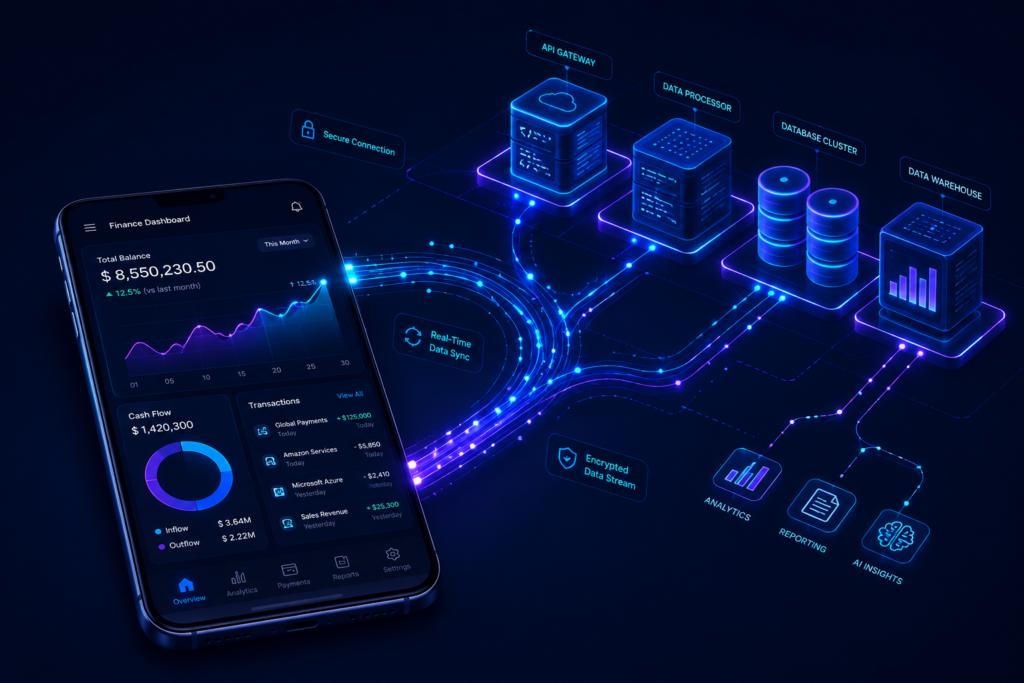
Building a reliable algorithmic trading system requires a structured, multi-stage pipeline. The architecture typically bridges data ingestion, signal generation, risk validation, and order routing.
[ Market Data Feeds ] ---> [ Feature Engineering & Signal Generation ] ---> [ Risk Management Filter ] ---> [ Order Execution API ]
Step 1: Data Ingestion and Normalization
An algorithm is only as good as the data feeding it. Systems connect directly to exchange APIs or data vendors to stream real-time order book depth, trade prints, and historical tick data. This raw data must be instantly cleaned, synchronized, and normalized to prevent execution errors caused by latency or missing timestamps.
Step 2: Feature Engineering and Logic
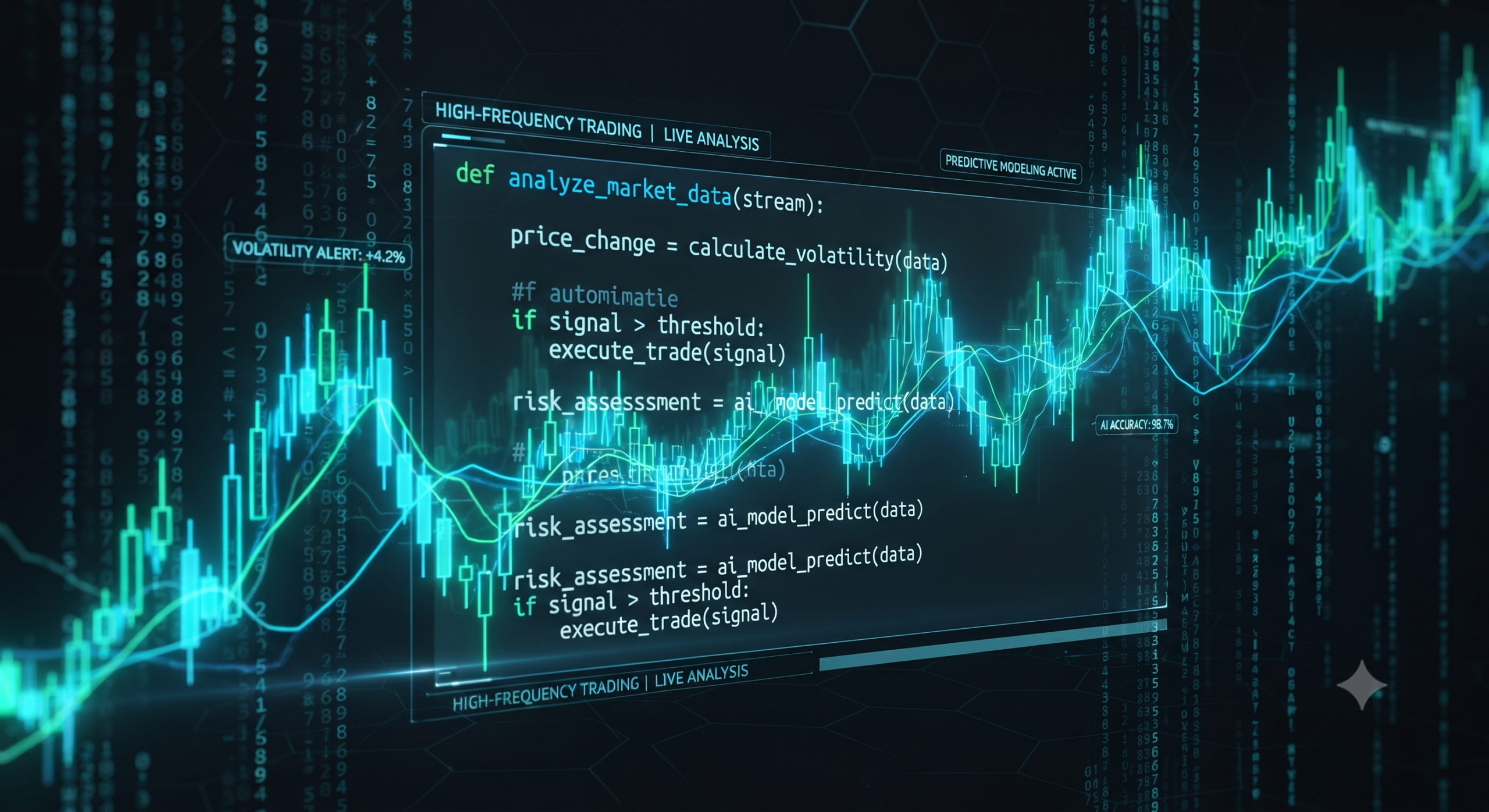
Once clean data is flowing, the system applies mathematical transformations. For Python-based developers, libraries like pandas and numpy process this data to calculate rolling volatility, momentum indicators, or machine learning model predictions. If the pre-defined mathematical threshold is met, the system generates a signal.
Step 3: Risk Management and Circuit Breakers
Before a signal is converted into a live order, it must pass through automated risk filters. Institutional-grade systems enforce strict parameters:
- Maximum Position Limits: Ensuring the algorithm never holds more than a predetermined net exposure.
- Drawdown Kill Switches: Automatically flattening all open positions and halting trading if daily portfolio losses exceed a specified threshold.
- Connectivity Monitoring: Instantly canceling outstanding limit orders if the server loses its ping connection to the exchange API.
Common Pitfalls: The Dangers of Overfitting
For aspiring quantitative developers, the path from backtesting a strategy to deploying live capital is fraught with hidden dangers. The most prevalent trap is overfitting (or curve-fitting).
Overfitting occurs when a developer fine-tunes an algorithm’s parameters so perfectly that it achieves a staggering win rate on historical data. For instance, testing a moving average crossover on a specific five-year dataset and discovering that periods of exactly 13 and 42 days yield 90% profitability. In reality, these parameters are optimized only for past market noise and will almost certainly fail when exposed to future market conditions.
Robust quantitative researchers combat overfitting by utilizing walk-forward optimization, out-of-sample testing, and keeping model complexity as low as possible. Furthermore, backtests must accurately account for transaction costs, bid-ask spreads, and slippage; a strategy that looks profitable on paper can easily be bled dry by execution fees if it trades too frequently on illiquid instruments.
Frequently Asked Questions (FAQ)
Do I need a background in advanced mathematics to build a trading algorithm? While advanced stochastic calculus and linear algebra form the backbone of institutional quantitative research, basic algorithmic trading requires a practical understanding of fundamental statistics, logic structures, and data manipulation languages like Python. Many retail traders successfully build simple rule-based momentum or mean-reversion bots using standard programming tutorials and public APIs.
What is the difference between High-Frequency Trading (HFT) and standard algorithmic trading? All HFT is algorithmic trading, but not all algorithmic trading is HFT. High-frequency trading is a specialized subset characterized by ultra-low latency infrastructure, collocated servers inside exchange data centers, and holding inventory for fractions of a second to capture micro-arbitrage opportunities. Standard algorithmic trading encompasses longer time horizons, ranging from minutes to weeks, focusing on trend capture and portfolio rebalancing.
Can algorithmic trading completely eliminate emotional trading? Yes, that is one of its primary psychological benefits. Human traders frequently fall prey to cognitive biases such as panic selling during market dips, greed during speculative bubbles, or «revenge trading» to recover losses. An algorithm executes code mechanically without fear, fatigue, or hesitation, strictly adhering to its programmed risk parameters.
Community Perspective & Discussion
Quantitative trading bridges the gap between software engineering and financial markets, but transitioning from a theoretical backtest to live execution presents unique hurdles.
Have you ever attempted to write a trading script or backtest a quantitative strategy using Python or other analytical tools? What was the biggest obstacle you faced—managing historical data hygiene, accounting for transaction slippage, or dealing with unexpected market volatility?
Drop a comment below and share your experience with automated trading systems. Your insights contribute directly to our community discussions!