
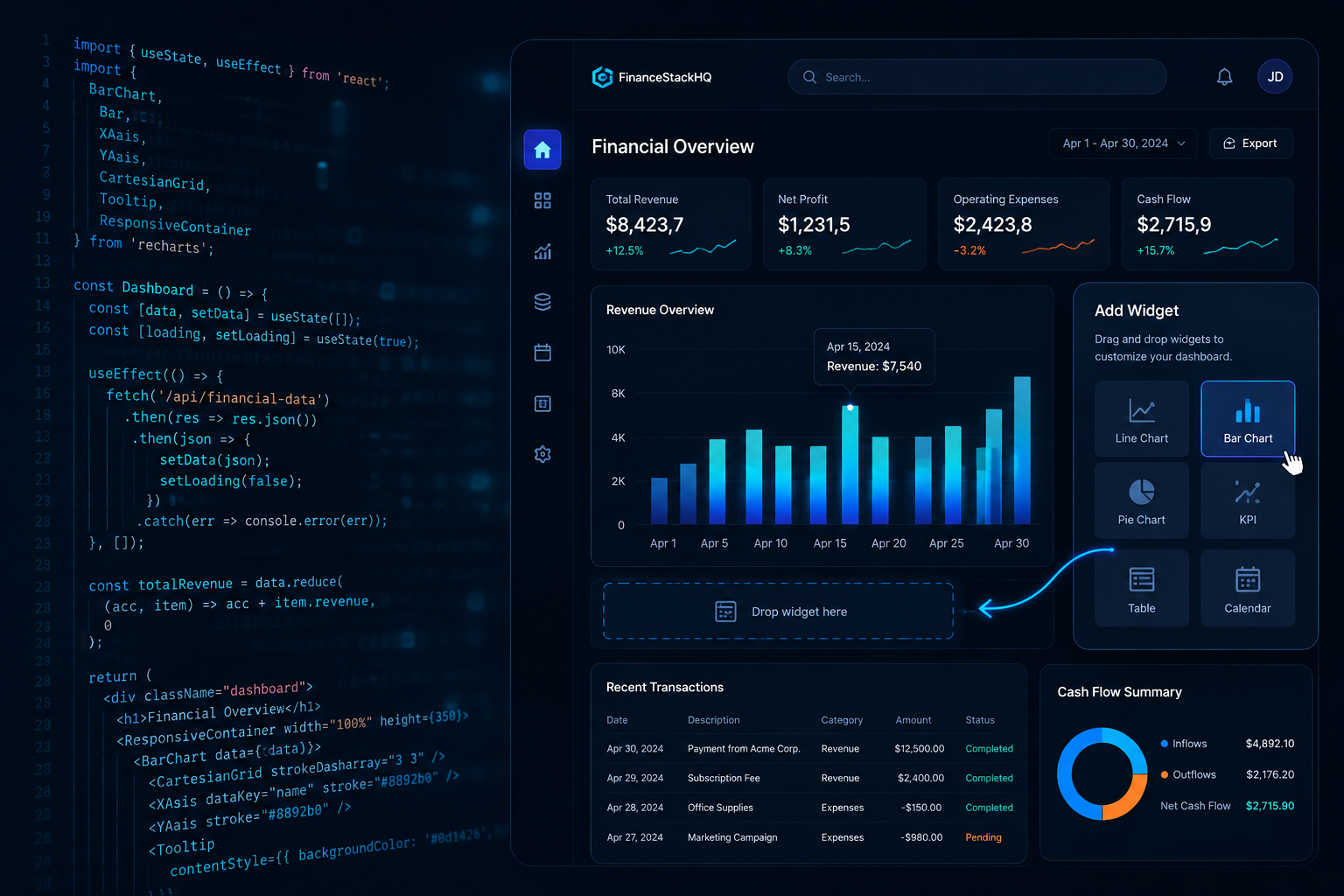
NoCodeData Explained: The Future of Data Integration and AI Without Code
The financial technology and data analytics sectors are undergoing a profound transformation. Historically, extracting actionable intelligence from massive datasets required specialized programming knowledge, complex SQL queries, and deep expertise in data engineering. However, an ongoing talent shortage and an increasing demand for real-time insights have accelerated the adoption of a new paradigm. At the forefront of this shift is the concept of NoCodeData—a technological framework that allows business analysts, financial managers, and operational teams to build data pipelines, train machine learning models, and create interactive dashboards without writing a single line of code.
By abstracting the underlying code into intuitive, visual interfaces, NoCodeData platforms are bridging the gap between raw data and strategic business decisions. This article explores the architecture of no-code data structures, the impact of low-code/no-code integrations on business intelligence, and how these tools are reshaping the future of enterprise analytics.
Understanding the NoCodeData Ecosystem
To fully grasp the impact of NoCodeData, it is essential to define what it encompasses and how it differs from traditional data management approaches.
No-Code vs. Low-Code Data Integration
While often grouped together, no-code and low-code platforms serve slightly different purposes within a data architecture:
- No-Code: These platforms are 100% visual. Users interact with data through drag-and-drop interfaces, drop-down menus, and pre-built templates. This approach is designed for business users who need immediate results and straightforward automation without dealing with technical complexity.
- Low-Code: This approach strikes a balance between visual simplicity and technical flexibility. It allows users to build pipelines visually but provides the option to inject custom scripts (such as Python, R, or SQL) to handle highly complex edge cases. It is often the preferred choice for technical analysts who want to save time on boilerplate coding while retaining customization capabilities.
Both methodologies share a common goal: uncoupling data integration from the IT department to prevent bottlenecks. By 2026, industry analysts like Gartner predict that up to 75% of new data integration workflows will be created by non-technical users, underscoring the massive shift toward decentralized data management.
The Evolution of ETL and ELT
In traditional data environments, moving information from a source (like a CRM or a billing platform) to a data warehouse required an ETL (Extract, Transform, Load) process heavily reliant on data engineers. NoCodeData platforms have revolutionized this by offering visual ETL and ELT builders. Users can connect to hundreds of SaaS applications via pre-built APIs, map columns, filter datasets, and perform multi-source joins visually. This enables a financial analyst to sync customer behavior data with quarterly revenue metrics seamlessly, entirely bypassing the engineering queue.
Automating Machine Learning: The «Glass Box» Approach
One of the most significant breakthroughs in the NoCodeData movement is its expansion beyond basic data movement and visualization into the realm of Artificial Intelligence and predictive analytics.
Platforms like Databricks are leading this charge with no-code Machine Learning (ML) solutions. Traditionally, building a predictive model required a data scientist to spend weeks on data preparation, feature engineering, and algorithm tuning. Today, automated machine learning (AutoML) frameworks allow «citizen data scientists» to achieve the same results in a fraction of the time.
How No-Code ML Functions in Practice
When a user uploads a dataset to a no-code ML platform, the system automatically analyzes the structure, identifies the most relevant variables, and tests multiple algorithms simultaneously to find the most accurate model. This enables finance teams to quickly deploy models for forecasting revenue, detecting fraudulent transactions, or predicting customer churn without needing to program the underlying neural networks.
Transparency and Compliance
A common criticism of AI in finance is the «black box» problem—the inability to explain how a model reached a specific decision. Leading NoCodeData ML platforms address this by utilizing a «glass box» approach. While the user interacts with a purely visual interface, the platform generates production-grade code (like Python notebooks) in the background. If a financial regulator or an internal compliance officer needs to audit the model, the exact code and mathematical logic are fully accessible, traceable, and version-controlled.
Visualizing Data: Dashboards and Business Intelligence (BI)
Once data is extracted, transformed, and enriched with predictive models, it must be presented in a digestible format. NoCodeData principles extend heavily into Business Intelligence and reporting.
As highlighted by modern data education channels like Datademia, tools such as Looker Studio (formerly Google Data Studio) perfectly encapsulate the no-code visualization philosophy. These free, cloud-based tools allow users to connect directly to simple databases like Google Sheets, CSV files, or robust data warehouses like BigQuery.
By utilizing visual canvas environments, analysts can construct interactive, self-updating dashboards. This eliminates the archaic practice of exporting static spreadsheets for weekly meetings. Instead, stakeholders receive secure, live links to dashboards where they can filter metrics by date, region, or product line in real time. The integration of AI into these BI tools further enhances usability, allowing users to query their data using natural language (e.g., «What was the revenue drop in Q3 compared to Q2?») instead of writing SQL queries.
Strategic Advantages of No-Code Analytics for Enterprises
The widespread adoption of NoCodeData tools in the US market is driven by several tangible operational benefits:
1. Rapid Implementation and Agility
Traditional data integration projects can take weeks or months to deploy due to rigorous coding, testing, and debugging phases. NoCodeData platforms drastically reduce this time-to-value. Thanks to visual interfaces and pre-configured connectors, new data pipelines and predictive models can be deployed in a matter of hours or days. This agility allows organizations to pivot quickly in response to market changes.
2. Efficiency and Cost Reduction
By eliminating the need for custom code, businesses reduce the technical debt associated with maintaining and debugging legacy scripts. It also mitigates the heavy reliance on highly paid, specialized developers for routine data tasks. These platforms often feature built-in error detection and automated failure alerts, ensuring that data pipelines remain stable with minimal manual oversight.
3. Democratization of Insights
Perhaps the most profound impact is cultural. When data access is restricted to a small team of engineers, organizations suffer from a siloed perspective. NoCodeData empowers marketing, finance, HR, and operations departments to formulate their own strategic questions and uncover actionable insights independently. This fosters a genuinely data-driven corporate culture where decisions are backed by empirical evidence rather than intuition.
Challenges and Best Practices for Implementation
Despite the overwhelming advantages, transitioning to a NoCodeData architecture is not without its hurdles. Organizations must approach deployment strategically to avoid common pitfalls.
The Illusion of «Zero Knowledge»
A widespread misconception is that «no-code» means «no learning curve.» While users do not need to know programming syntax, they absolutely must understand the fundamental logic of data modeling. If a user does not understand how a primary key works or the difference between a left join and an inner join, a visual interface will simply allow them to create flawed data models faster. Training business users on foundational data literacy remains critical.
Data Governance and Quality Control
A NoCodeData platform, regardless of how advanced its AI is, remains bound by the rule of «garbage in, garbage out.» If the underlying data is unstructured, inconsistent, or riddled with errors, the resulting analytics will be inaccurate. Establishing strict data governance policies, standardizing naming conventions, and implementing access controls are mandatory steps before rolling out no-code tools globally.
Managing Shadow IT
When business units are empowered to build their own integrations and databases, there is a risk of creating decentralized, unmonitored systems (often referred to as Shadow IT). IT departments must act in a supervisory role, providing a secure, governed sandbox environment where business users can innovate without compromising the organization’s overarching security protocols.
Community Insights: What is Your Experience?
The transition from strictly engineered data pipelines to visual, no-code environments represents a major shift in how modern businesses operate.
Have you or your team started integrating NoCodeData tools for financial reporting, ETL processes, or machine learning? Did the transition empower your department to make faster decisions, or did you encounter unexpected hurdles with data governance and architecture?
We want to hear your perspective! Drop a comment below sharing your firsthand experience with low-code/no-code platforms in your daily workflow. Your insights help the community navigate this technological evolution.
Frequently Asked Questions (FAQ)
Do I need to know SQL to use NoCodeData tools? No. The primary value proposition of NoCodeData platforms is that they replace the need for SQL with visual, drag-and-drop interfaces. However, possessing a basic understanding of relational data logic (how tables connect and how data is aggregated) is highly recommended to build accurate workflows.
Are NoCodeData platforms secure enough for sensitive financial information? Yes, enterprise-grade no-code platforms are built with stringent security protocols, including Role-Based Access Control (RBAC), end-to-end encryption, and comprehensive audit logs. Furthermore, because they connect via secure APIs rather than requiring manual data exports, they often reduce the security risks associated with emailing static spreadsheets.
Will no-code platforms replace Data Engineers? Absolutely not. NoCodeData tools are designed to automate routine, repetitive tasks and empower business users to handle standard reporting. This actually benefits Data Engineers by freeing them from basic request queues, allowing them to focus on highly complex architectural challenges, advanced algorithmic development, and enterprise data governance.